So having posted the Philpapers survey results, the biggest ever survey of philosophers conducted in 2009, several readers were not aware of it (the reason for re-communicating it) and were unsure as to what some of the questions were. I offered to do a series on them, so here it is – Philosophy 101
A West Virginia high school student is filing an injunction against her principal, who she claims is threatening to punish her for speaking out against a factually inaccurate abstinence assembly at her school. Katelyn Campbell, who is the student body vice president at George Washington High School,

Some research out seems to support an idea that 'bad decisions' that we make are as a result of the quality of the information coming in rather than the quality of the systems working on that information. Of course, this may call into question the quality of the systems actually responsible for coll
The No True Scotsman fallacy is a well-used fallacy in debates about religion with religionists. As wiki defines:
No true Scotsman is an informal fallacy, an ad hoc attempt to retain an unreasoned assertion.[1] When faced with a counterexample to a universal claim, rather than denying the counter
I thought I'd give you a selection of some jolly nice quotations: The existence of a world without God seems to me less absurd than the presence of a God, existing
We are trying to stay ahead of the game, as a network. Thinking about how we could provide our readers with as much content and resources, we have developed a channel here at our SIN headquarters.
So Dr Caleb Lack, a fellow SINner, and I had a chat a few weeks back. It is due to go out as a Skepticule Extra podcast, but since there have been a few delays, I am putting it out here first. It was a really enjoyable chat / interview, covering cognitive biases, atheism and god. We had a great time
So, complexity is supposedly a tough one for 'evolutionists'. Well, it's not really, if you have ever read around the subject. Incremental steps, such as is evidence with the eye in all its various complexities throughout the natural world, seem to do the trick.
So, on reading some work by fellow SINner David Osorio over at Avant Garde, I was alerted to this article by John Horgan about whether or not research supports benefits of meditation or not. It seems that it doesn't, really.
Pain is a really important notion in conversations about subjective experience and qualia. I'll have to think about how this might or might not affect ideas of the hard problem of
Jerry Coyne reported this recently. It follows in a line of items in the news about TED and their speakers being somewhat unscientific. Well, in relation to this, TED have pulled their licence on a TEDx to have taken place in Hollywood. As Coyne reports:
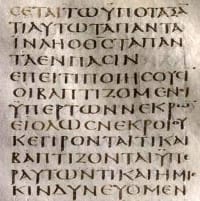
Man can do what he wills but he cannot will what he wills.
I've always liked this quote from Arthur Schopenhauer, so much so that I thought I'd post it here, though it does have a few forms and is often misquoted, as I have no doubt done.